Practical guide · Valencian Community Via ferratas: a guide to starting
What a via ferrata is, how its difficulty is measured, what gear you need and which one to choose for your first time in Valencia, Castellón and Alicante.
What is a via ferrata
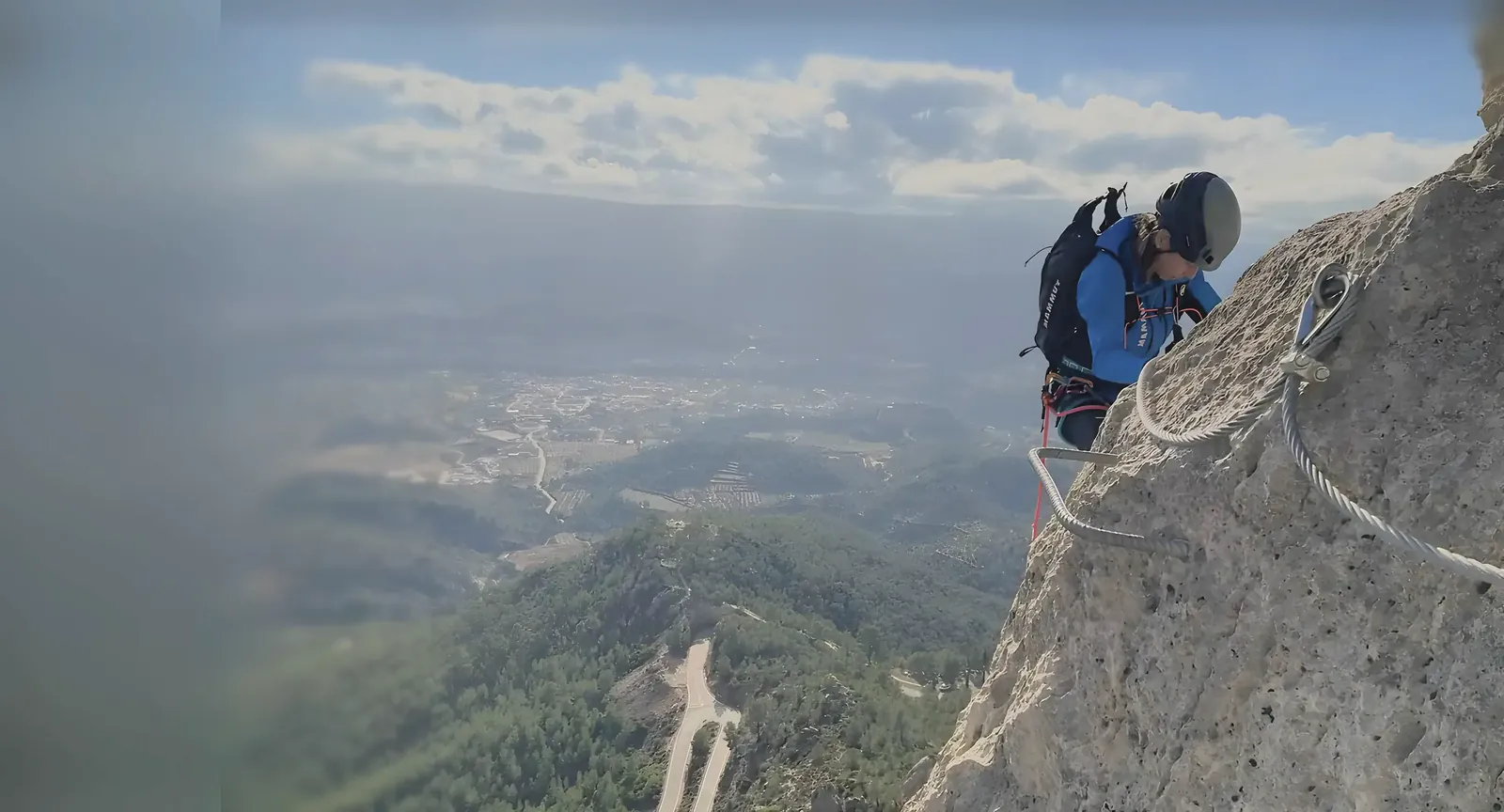
A via ferrata is a rock route equipped with rungs, cables, handrails and sometimes bridges, which lets you climb walls that would otherwise be for climbers only. You are always clipped to a steel cable with harness, helmet and energy absorber, so you do not need to know how to climb.
They were born in the Dolomites, where mountain passes were equipped during the First World War. Today there are via ferratas all over Spain, and the Valencian Community has many spread across its three provinces, from short beginner walls to long and very vertical routes.
It is a way to experience verticality and mountain views with the risk under control, as long as you go with the right gear and know how to use it.
At Montania you are guided by Aitor Martínez, author of Ferratas del Levante Peninsular (Ediciones Desnivel, 2019), the guidebook to the via ferratas of the Valencian Community and the Region of Murcia.

K grades: how difficult each via ferrata is
Difficulty is measured with the K scale, from K1 to K6. We explain it in more detail on difficulty levels.
What gear you need
The safety gear is a harness, a helmet and a via ferrata energy absorber, with its lanyard and its two carabiners: if you fall, the absorber soaks up the energy of the impact. It is the gear we include on all our outings, and if you go on your own we also rent it in Valencia, from €25 a day. We explain how it works and when to replace it in our via ferrata gear guide.
The rest is up to you: mountain footwear with a good sole, mountain clothing for the season, a small backpack with water (a litre and a half) and something to eat, sunglasses, sun cream and a cap. Short fingerless cycling-style gloves are not compulsory, but they help.
Which via ferrata to start with in the Valencian Community
These are the ones we guide, ordered from easiest to hardest. If you are looking at other provinces, see our guides to via ferratas in Alicante and in Castellón.
Other via ferratas in the province of Valencia
Besides the ones we guide, the province has these, from easiest to hardest. The grade is set by whoever equips each via ferrata and the equipment changes over time: check its condition before you go.
According to specialist websites, the ones at Molón (Camporrobles) and Aielo de Malferit are closed. If you go on your own, we rent you the gear in Valencia; if you prefer a guide, start with the ones above.
Safety tips
Check the forecast before setting off: with a risk of storms you do not go onto a via ferrata, because the cable attracts lightning, and wet rock is slippery. In summer, start early and bring plenty of water.
Always keep both carabiners clipped to the cable and move them one at a time at each anchor. Stick to the route and do not throw stones: there may be people below.
If it is your first time, do it with a qualified guide: they teach you to use the gear, choose the via ferrata that suits you and stay with you on the most intimidating moves.

Frequently asked questions about via ferratas
What people ask us most before their first via ferrata. If you have any questions, message us on WhatsApp.
Do you need experience to do a via ferrata?
For a beginner via ferrata, like the Chorrico (K2), no. For intermediate ones it is best to have done an easy one first, and K6 sections require experience and arm strength.
Which via ferratas are there in the province of Valencia?
The ones we guide: Fuente del Chorrico (Tous), Fuente Godalla (Enguera), El Remedio (Chelva), El Monje (Cortes de Pallás) and La Mulatica (Andilla). There are also La Puente (Casas Bajas), La Lámpara (Titaguas), Asalto a la Villa (Castielfabib), La Falconera (Gandía), El Pesebre dels Corbs (Moixent), Penya Roya (Losa del Obispo), Les Marujes (Tavernes de la Valldigna), L’Aventador (Xàtiva) and Los Fresnos (Quesa). See their grades.
What is the easiest via ferrata in Valencia?
Of those we do with a guide, the Fuente del Chorrico, in Tous: beginner level (K2), short and with the rungs close together.
How old do you have to be?
With us, the minimum age is 14. For younger children, ask us.
Can you do a via ferrata if you suffer from vertigo?
With mild vertigo, many people enjoy starting on a short beginner via ferrata with a guide. If your vertigo is severe, we do not recommend it.
When is the best time?
Almost all can be done all year round; in summer, better early in the morning. El Monje is only open from 1 July to 29 December, because of Bonelli's eagle breeding.
Can I rent the gear in Valencia?
Yes: we rent the full via ferrata kit (harness, energy absorber, anchor lanyard and helmet) in Valencia city, from €25 a day. See the rental
How much does a guided via ferrata cost?
With us, from €55 per person, with a qualified guide and all the gear included.
Shall we do your first via ferrata?
With a qualified guide and all the gear included, from €55. Message us with the date and number of people and we will confirm straight away.